You Do Not Need to Become Someone Else

Updated: Aug 23
Real transformation begins when you stop trying to escape your life and start deciding how you want to live it.
There are moments when a woman looks at her life and realizes that something needs to change, even if she cannot yet explain exactly what that change should be. Nothing may appear dramatically wrong from the outside. The bills are being paid, the appointments are being kept and the people who depend on her are still receiving what they need. She may seem capable, responsible and perfectly functional while privately feeling that the life she is maintaining no longer reflects the person she has become.
That feeling can be difficult to acknowledge because it does not always arrive as a clear crisis. Sometimes it appears as restlessness, exhaustion or a growing resentment toward responsibilities that once felt manageable. It may surface when she realizes that nearly everything on her calendar belongs to someone else, or when she struggles to remember the last time she felt genuinely interested in her own life. She may not want to abandon everything she has built, but she can no longer ignore the sense that she has been living according to old expectations, outdated priorities or decisions made by a much earlier version of herself.
When we feel this way, it is tempting to imagine that transformation requires an entirely different life. We picture a dramatic resignation, a move to another city, a renovated body, a new relationship or some brave reinvention that creates a clear dividing line between who we were and who we are becoming. Yet most meaningful transformation is quieter than that. It often begins with an honest admission that one part of our life is no longer working and the willingness to examine why.
Recognizing that something no longer fits does not mean your entire life has been a mistake. A role can have been right for you ten years ago and still feel too small today. A routine can carry you through a difficult season and eventually become something that keeps you stuck. Even dreams can expire when they no longer reflect what you value or want. We are allowed to outgrow plans that were created by an earlier version of ourselves without judging that woman for making them.

Women are often encouraged to endure discomfort rather than examine it. We tell ourselves to be grateful, try harder, become more organized or wait until life settles down. We make small adjustments around the edges while avoiding the deeper question of whether the life we are working so hard to maintain is still the life we want. An honest answer may reveal that we are devoting too much time to obligations that no longer matter, remaining in relationships where we feel more useful than known or filling every empty space because stillness might force us to notice what is missing.
Those realizations can be uncomfortable, but clarity is not a crisis. It is an opening. Once we understand what is depleting us, we can begin deciding what deserves to remain. We may discover that much of our life is still worth preserving and that only a few important areas need to change. Transformation does not always require tearing everything down. Sometimes it means keeping what is good while becoming more deliberate about what we allow to shape our days.
Transformation Should Not Begin with Self-Rejection
There is a version of personal growth that begins with criticism. It tells us we are too undisciplined, too cautious, too old, too late or too far behind. It presents transformation as another project for correcting everything supposedly wrong with us. We create plans from frustration, set unrealistic expectations and then use every imperfect day as further evidence that we cannot be trusted to change.
You do not have to dislike the woman you are in order to become the woman you want to be. Transformation becomes more sustainable when it begins with respect for the person who carried you this far. She made the best decisions she could with the knowledge, resources and strength available to her. Some of those decisions created a beautiful life, while others created patterns you may now be ready to change. Both can be true without turning your past into something you must regret.
Instead of trying to erase that woman, listen to what she has been communicating through her exhaustion, resentment, curiosity and longing. Consider where she feels most alive, what she has been postponing and which parts of her life still feel honest. Notice the roles that fit naturally and the ones that have begun to feel like costumes she continues wearing because other people are accustomed to seeing her in them. Transformation starts when we become curious about these answers rather than ashamed of them.
A Clear Direction Matters More Than a Perfect Plan
Once we decide that something needs to change, many of us immediately try to redesign everything. We create an ambitious list involving our health, home, finances, work, relationships, appearance and daily routine. The possibility feels exhilarating for several days, but ordinary life eventually returns. The list becomes overwhelming, our enthusiasm fades and we conclude that we have failed again when the real problem may be that we attempted too many transformations at once.
A more realistic beginning is to decide what matters most in this particular season. Perhaps you want to rebuild your physical strength, protect your peace or create work that feels meaningful. You may need to restore a neglected relationship, make room for creativity or address a responsibility that has been draining you for years. Choosing three priorities does not mean the rest of your life is unimportant. It simply gives your time and energy somewhere specific to go.
From there, transformation becomes practical. Instead of promising to take better care of yourself, you schedule the appointment, take the walk or protect one evening each week for rest. Instead of declaring that you will become more confident, you make one decision without asking everyone else to approve it. Instead of waiting to discover one grand purpose, you spend time doing something that makes you feel interested in your life again. These actions may seem small, but repeated choices gradually become evidence that your life is beginning to reflect your intentions.
The Woman You Are Becoming Is Already Here
The woman you want to become is probably not a stranger. You may already recognize her in brief moments when you speak honestly, protect your time, leave the gathering when you are tired or try something unfamiliar without demanding that you be immediately good at it. She appears whenever you make a choice from self-respect instead of fear. Becoming her does not require waiting for the perfect year, body, bank account or burst of courage. It requires understanding what you want to preserve, what you are ready to release and what you are willing to practice next.
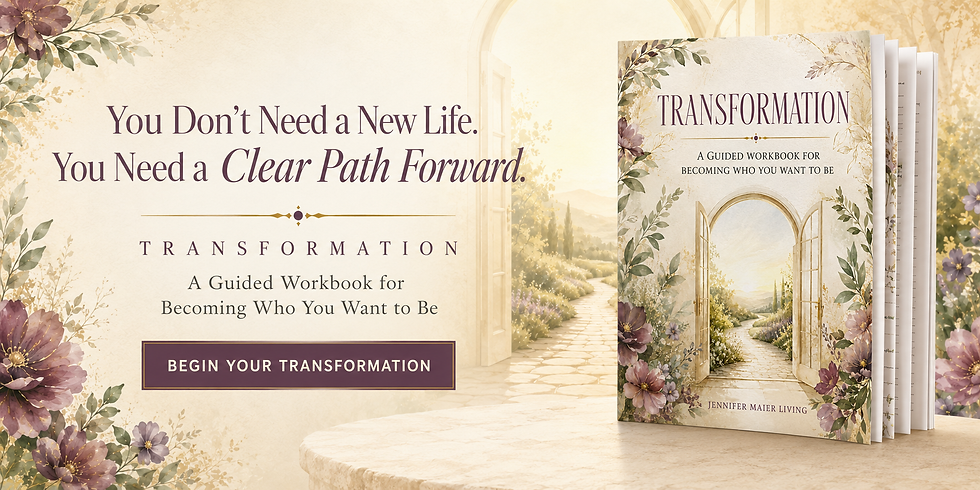
That is the purpose of Transformation: A Guided Workbook for Becoming Who You Want to Be. It was created to help you take an honest look at your life without treating yourself like a problem that needs to be fixed. Through guided assessments and thoughtful questions, you will identify what is working, recognize what is no longer serving you, reconnect with your values and clarify the person you want to become.
You will then choose three meaningful priorities and turn what you have discovered into a realistic 30-day path forward. This is not a demand for complete reinvention or an impossible promise to change everything by Monday. It is a clear and manageable beginning grounded in the life you are actually living. Transformation happens when our daily choices begin catching up with what we already know, and you may discover that you do not need an entirely new life. You may simply need the clarity and courage to begin living this one differently.


Comments