What If You Stopped Being Who Everyone Expected You to Be?

Updated: Aug 23

Most women can name the roles they play without giving the question much thought. We are wives, mothers, daughters, sisters, friends, employees, caregivers, organizers and peacemakers. We are the ones who remember birthdays, notice when someone is struggling and make sure everything keeps moving. Over time, people come to know what they can expect from us. We will answer the call. We will smooth over the disagreement. We will find a way to make it work. We become so reliable in these roles that it may never occur to anyone—including us—to ask whether they still fit.
These expectations rarely arrive as demands. More often, they begin as compliments. You are so dependable. You are the strong one. You have always been good at taking care of people. At first, it feels good to be appreciated. Most of us genuinely want to be kind, helpful and trustworthy. But praise can quietly harden into expectation, and expectation can eventually become identity. Before we realize what has happened, we are no longer choosing to be the person who handles everything. We simply assume that we have no other choice.
There is nothing wrong with being generous or responsible. The problem begins when we become so committed to meeting everyone else’s expectations that we lose contact with our own desires. We may continue saying yes because that is what the dependable woman does. We may avoid difficult conversations because the peacemaker is not supposed to make anyone uncomfortable. We may carry responsibilities long after they have become too heavy because putting them down would surprise or disappoint the people who have grown accustomed to seeing them in our hands.

Sometimes the first indication that something no longer fits is not a dramatic crisis. It is a quiet resentment we cannot explain. It is exhaustion that sleep does not seem to cure. It is the strange feeling that we are present for every part of our lives but somehow absent from the center of them. We may look around at a life we worked hard to build and wonder why we no longer feel entirely at home inside it.
That question can bring guilt with it. A woman may worry that wanting something different means she is ungrateful for what she has. She may fear that changing will hurt the people she loves or make her appear selfish. But questioning an expectation is not the same as rejecting a person. Recognizing that a role has become too restrictive does not erase the love, effort or good intentions that once shaped it. It simply means we are paying attention to who we have become.
Perhaps the better question is not, “How do I stop being everything to everyone?” Most of us cannot—and may not want to—walk away from every responsibility. The more useful question is, “What am I still choosing, and what am I doing simply because it is expected of me?” That distinction matters. The same act can feel entirely different when it comes from love instead of fear, willingness instead of obligation, or choice instead of habit.

The answer does not require an immediate reinvention. We do not have to announce a new identity, overturn our lives or disappoint everyone at once. We can begin much more quietly. We can pause before an automatic yes. We can notice the responsibilities that fill us with meaning and the ones that leave us feeling diminished. We can allow ourselves to have preferences without defending them and needs without apologizing for them. We can make one small decision based on what feels true rather than what will keep everyone else comfortable.
Some people may resist even a small change. They may prefer the version of us who never asked for help, set a boundary or reconsidered an old arrangement. Their disappointment can feel like evidence that we are doing something wrong, but it may simply mean that the change is real. When we stop playing a familiar role, the people around us must adjust too. Their discomfort does not automatically make our decision unkind.
There is a quiet freedom in realizing that being capable of carrying something does not mean it must always remain ours to carry. We can remain loving without being endlessly accommodating. We can be dependable without making ourselves responsible for everyone’s happiness. We can honor the woman we have been while giving the woman we are becoming room to speak.
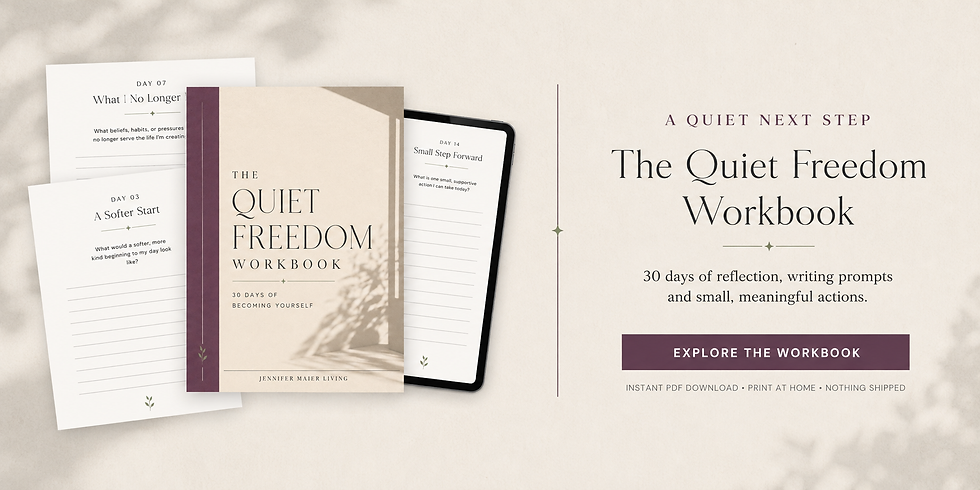
Learning to separate who we are from who we have been expected to be rarely happens in one dramatic moment. It happens through honest questions, quiet reflection and the willingness to hear our own voices again. I created The Quiet Freedom Workbook as a guided place to begin that process—30 days of thoughtful prompts, personal reflection and small, meaningful actions designed to help you release what no longer fits and make room for the person you are becoming. You do not have to know exactly who that person is yet. You only have to become willing to meet her.



Comments