The September Reset You Didn’t Know You Needed

Updated: Aug 23
How slowing down before fall can protect your peace, prevent burnout and help you enter the holidays stronger

September does not arrive with the same ceremony as January. There is no countdown, no champagne toast and no collective declaration that we are all about to become better people. Yet something changes as summer begins to loosen its grip.
Children return to school, schedules become more structured, organizations resume their regular meetings, work begins moving at full speed again and the first signs of the approaching holidays quietly appear in stores. Even if you do not have children at home—and I do not—you can still feel the world around you beginning to accelerate.
This is the moment when I believe we need a September reset.
If you have never heard that phrase before, you are not alone. I had not thought of September as a time for resetting either. January has always claimed that territory. But the more I considered the natural rhythm of the year, the more September began to feel like an overlooked threshold—a brief space between the relative freedom of summer and the increasingly demanding months ahead.
A September reset is a deliberate pause before fall begins moving so quickly that you no longer have time to take stock of your own life. It is an opportunity to look at what you are carrying, decide what deserves to continue into the new season and release what could leave you exhausted before the holidays even arrive.

It is not another challenge, organizing project or ambitious list of habits. It does not require new storage containers, an elaborate morning routine or a beautifully coordinated planner. In fact, the purpose is almost the opposite. The September reset is not about doing more. It is about protecting your sanity before the pace of life convinces you that everything is urgent, everything is necessary and everything is somehow your responsibility.
Without that pause, it is remarkably easy to wake up one morning and discover that the holidays are only a few weeks away. By then, the calendar is crowded, expectations have multiplied and everyone seems to need something. There are work deadlines, family commitments, meals to plan, gifts to buy, gatherings to attend and traditions we continue simply because we have always continued them. What should feel meaningful begins to feel like an assignment we are racing to complete.
I have experienced years when the holidays were not enjoyable because I entered them already depleted. There were too many work requirements, too many responsibilities and too little time to recover between one obligation and the next. I was physically present for the holidays, but I was not truly enjoying them. I was managing them.
There is an important difference between experiencing a season and managing it. When we spend October, November and December keeping everyone happy, handling every detail and trying to create a perfect holiday, we can reach the end of the year wondering where it went. The photographs may show decorations, gatherings and smiling faces, but our memories are filled with lists, deadlines and exhaustion. We promise ourselves that next year will be different, yet next year often arrives carrying the same expectations.
A September reset gives us the chance to make it different before the pressure begins.

The first step is not deciding what you should add. It is noticing what you are already carrying. Look at the obligations that followed you through summer. Consider the responsibilities you accepted without questioning whether they still belong to you. Think about the things you do because other people expect them, because you have always done them or because saying no feels more uncomfortable than quietly overextending yourself.
Then ask yourself: Do I want to carry all of this into fall?
Some responsibilities cannot be removed. Life does not become effortless simply because we decide to slow down. But there is often more room for choice than we initially believe. A commitment may not need to be abandoned, but it might need a boundary. A tradition may not need to disappear, but it might become simpler. A task may still need to be completed, but perhaps it does not always have to be completed by you.
This is also the time to notice the early signs of burnout instead of waiting until you are too overwhelmed to respond to them. Are you becoming irritated by ordinary requests? Does every new commitment feel like one demand too many? Are you moving through your days without ever feeling fully present? Do you keep telling yourself that you will rest after the next deadline, the next event or the next holiday?
Burnout rarely arrives as one dramatic collapse. More often, it builds quietly as we continue saying yes, continue pushing and continue postponing our own needs. By the time we acknowledge it, we may have forgotten what it felt like not to be exhausted.
The September reset interrupts that progression. It invites you to slow down while you still have enough perspective to make thoughtful choices. It gives you the opportunity to protect open spaces on your calendar, establish boundaries before they are tested and decide what kind of holiday season you actually want.
What always overwhelms you during the final months of the year? Where do you routinely overspend your money, time or energy? Which traditions genuinely matter to you, and which ones have become performances you feel obligated to repeat?
There is strength in deciding early. You can choose now that you will not accept every invitation. You can decide that one meaningful tradition is worth more than six exhausting ones. You can establish a holiday budget before urgency and emotion begin influencing your decisions. You can ask other people to participate instead of silently assuming that everything depends on you.
Most importantly, you can stop confusing a full schedule with a meaningful life.
Slowing down in September may feel counterintuitive because the world around us appears to be speeding up. That is precisely why the pause is necessary. When everyone else begins rushing, we need enough clarity to know which direction we actually want to travel. Otherwise, we are swept into the season by momentum, responding to whatever feels most urgent and neglecting whatever matters most.
A reset does not mean withdrawing from life. It means entering it more intentionally. Perhaps your reset involves creating quieter mornings before the days become crowded. Perhaps it means returning to walking, prayer, reading or another practice that helps you hear yourself think. Maybe it is deciding that your home does not need to be transformed for every season. Maybe it is asking your family to share the holiday work before you become resentful and exhausted. Maybe it is simply giving yourself permission to leave some things undone.
The goal is not to become perfectly organized before fall. The goal is to become more honest about what you can carry without losing yourself.
We understand the importance of pausing when we enter a major new season of life—a career change, retirement, an empty nest, a health challenge or a personal reinvention. But the changing seasons of the year can also offer meaningful checkpoints. They remind us that life moves in cycles and that we are allowed to adjust rather than dragging every old expectation into every new chapter.

By the time the holidays arrive, the benefits of your September reset may be subtle but profound. You may have more patience because you are not operating from depletion. You may enjoy a gathering because you did not spend the previous week trying to make it flawless. You may remember the conversation instead of the cleanup. You may enter January without feeling as though you need an entirely new life to recover from the one you just lived.
That is what makes September such a valuable moment. It offers us a chance to prepare, not by doing more, but by choosing more carefully. We can decide which expectations deserve our energy, which traditions still hold meaning and which version of ourselves we are no longer willing to perform.
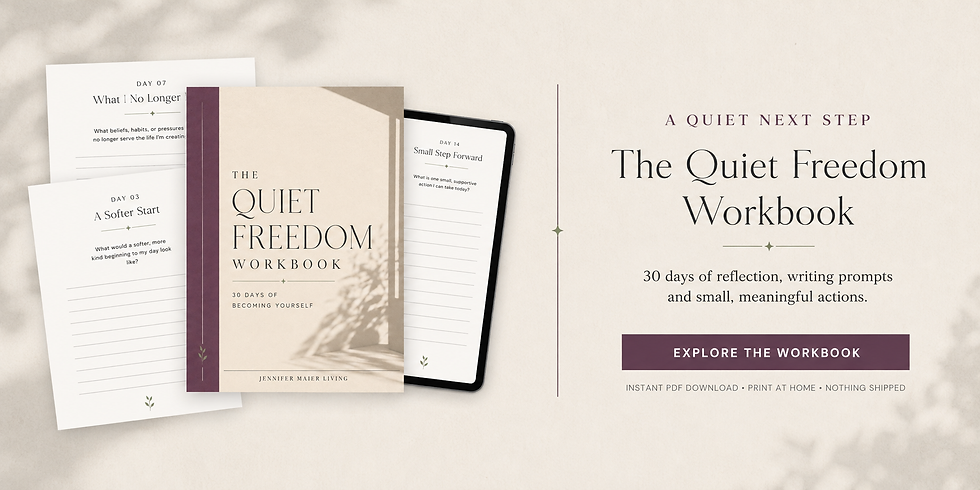
If this new season has you questioning the roles and expectations you have carried for years, The Quiet Freedom Workbook can help you explore those questions more deeply. This paid 30-day digital workbook offers guided reflection to help you release outdated expectations, listen to your own voice and make room for the woman you are becoming.
Fall is approaching, and the busiest months of the year will follow close behind. You do not have to rush into them. You are allowed to pause at the threshold, protect your peace and decide how you want the rest of your year to feel.



Comments