What Happens When Your Needs Always Go Unmet

Updated: Aug 23
How to recognize what is missing, ask for what you need and begin changing what is no longer working
Most women do not wake up one morning and decide that their needs no longer matter. It happens gradually, usually during a busy season when someone else requires more attention and something important to us gets postponed. We tell ourselves we will rest after this project, make the appointment next month or return to something we love when everyone else needs us a little less. The problem is that one busy season can quietly become a way of life, and the needs we postponed can become the needs we barely acknowledge.
Unmet needs do not disappear simply because we have become skilled at ignoring them. They often return in less recognizable forms, appearing as irritability, resentment, exhaustion, loneliness or an overwhelming desire to escape from a life that looks perfectly acceptable from the outside. We may become impatient with people we love, withdraw from activities we once enjoyed or feel strangely numb when we believe we ought to feel grateful. These reactions do not necessarily mean we are selfish or unappreciative; sometimes they are signals that something important has gone unattended for too long.
Notice the Toll Before You Judge Yourself
When a woman has spent years being dependable, she may not immediately recognize how depleted she has become. She is accustomed to functioning while tired, solving problems while overwhelmed and reassuring everyone else while quietly wishing someone would ask what she needs. Ordinary requests begin to feel like one demand too many, and responsibilities she once handled willingly start producing resentment. Instead of treating those feelings as evidence that she has become difficult, she can begin asking what they may be trying to tell her.
You might notice that you are unusually short-tempered, constantly tired or increasingly withdrawn from the people around you. You may fantasize about checking into a hotel alone, not because you want to abandon your life, but because you want one day during which no one asks anything of you. You may find yourself envying people who appear to have fewer obligations, even when you know nothing about their actual circumstances. These feelings deserve curiosity before criticism, because resentment is sometimes evidence that you have repeatedly agreed to something that is no longer sustainable.

Identify What Is Actually Missing
Saying “I am unhappy” may be completely true, but it does not tell you what needs to change. The next step is identifying what the unhappiness is trying to communicate. Perhaps you need practical help at home, uninterrupted rest, affection, appreciation, privacy or time during which you are not responsible for another person. You may need emotional support, financial security, companionship, creative expression or the freedom to speak honestly without being dismissed or corrected.
It can help to complete a simple sentence: What I need more of in my life right now is __________. Then ask what you need less of—less noise, less rushing, less criticism, fewer responsibilities or less time spent doing things simply because you have always done them. Naming a need does not guarantee that it will immediately be met, but it turns a vague sense of dissatisfaction into something you can begin to understand. It also helps you recognize that what appears to be one problem may actually be several smaller problems that can be addressed individually.
Separate the Need from the Solution
A need and a preferred solution are not always the same thing, and understanding the difference can make difficult conversations more productive. The need may be more support at home, while your first solution is that your spouse must take over one particular task. That may be a reasonable request, but there could also be other workable solutions, such as dividing the responsibility differently, hiring occasional help, simplifying the task or deciding that it does not need to be done as often. Remaining flexible about the solution does not require you to minimize the importance of the underlying need.
The same principle applies when the need is rest, privacy or companionship. Rest might come from an earlier bedtime, fewer evening obligations or someone else assuming responsibility for a recurring chore. Companionship might mean reconnecting with an old friend, joining a group or asking someone you love to spend intentional time with you. When you understand the need beneath your preferred answer, you create more possibilities for meaningful change.
Be Honest About Why the Need Has Remained Unmet
This part requires honesty without automatically assigning all the blame to yourself or someone else. Have you clearly expressed what you need, or have you hoped that someone would notice? Have you minimized your needs because other people’s problems seemed more urgent, or felt guilty asking for help because you believed capable women should manage everything themselves? Sometimes we unintentionally teach the people around us that we can handle anything because admitting otherwise feels like failure.
There are also times when a woman has communicated clearly and repeatedly, but the people around her have become comfortable ignoring what she says. She has asked for help, explained the toll and proposed reasonable changes, yet nothing improves because the current arrangement works well for everyone except her. People cannot respond to needs they genuinely do not know about, but repeated dismissal after clear communication is different. When someone understands that you are struggling and continues to treat your well-being as optional, that response provides information you should not ignore.
Ask Clearly Without Apologizing for Having a Need
Many women soften a request so thoroughly that the request almost disappears. We laugh while saying we are overwhelmed, describe an important concern as “no big deal” or add so many apologies that the other person never understands how serious the situation has become. Clear communication does not have to be harsh or accusatory. It simply means allowing the truth to remain visible instead of disguising it to keep everyone else comfortable.
You might say, “I have realized this responsibility is taking a greater toll on me than I admitted, and I need us to find a different way of handling it.” You could also say, “I need one evening each week that is not committed to anyone else, and I want us to look at the schedule and protect that time.” Language like this identifies both the problem and the need without turning the conversation into an attack. It also gives the other person a fair opportunity to understand what you are asking and participate in finding a workable solution.
Begin With One Change You Can Actually Make
When everything feels wrong, it is tempting to believe that everything must change immediately. That belief can leave us so overwhelmed that we change nothing at all. Instead, choose one unmet need and one realistic action that would begin addressing it. Divide one responsibility, decline one recurring obligation, schedule one appointment, protect one hour or ask one person for specific help.
A small change may not solve the entire problem, but it creates evidence that your life is not completely fixed in place. It also gives you an opportunity to notice how the change feels and how the people around you respond. A caring person may need time to adjust and may not agree with every proposed solution, but there should be a willingness to listen and take the need seriously. Ridicule, punishment, manipulation or endless promises without action communicate something very different.
Stop Waiting for Permission Where You Have a Choice
Not every unmet need can be resolved alone because relationships, families and workplaces require cooperation. Even so, there may be parts of your well-being that you can stop waiting for someone else to authorize. You can rest before every problem has been solved, schedule your medical appointment, take a walk, call a friend, return to church or begin a creative project that belongs only to you. You can decide that one tradition has run its course or that one responsibility can no longer continue in its current form.
These choices are not declarations that only your needs matter. They are acknowledgments that your needs belong in the conversation alongside everyone else’s. You may not control every circumstance or another person’s response, but you can begin treating your own well-being as something worthy of consideration. Sometimes that change in perspective is the first meaningful step toward changing the larger pattern.
Making Room for Your Own Life
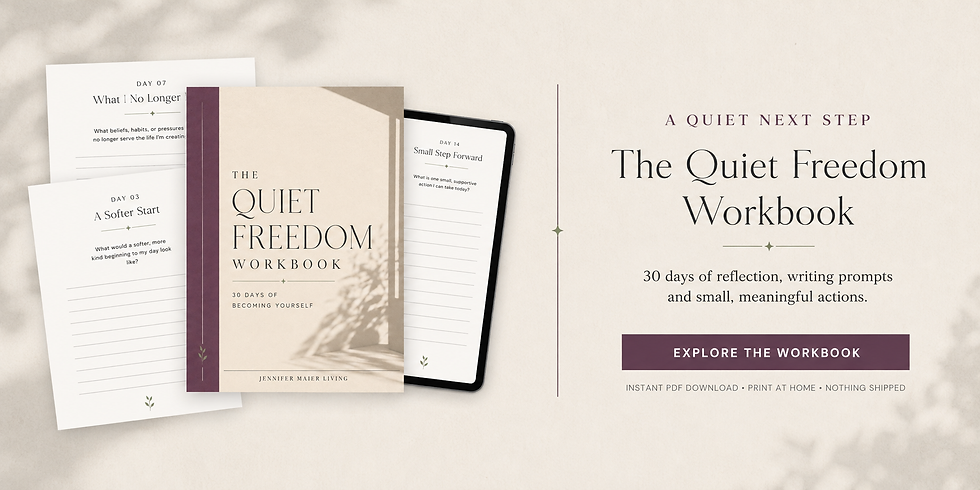
Before you can ask for what you need, you may have to remember that you are allowed to need anything at all. That is where The Quiet Freedom Workbook fits naturally into this conversation. The 30-day guided workbook was created to help you examine the expectations, guilt and outdated roles that may have taught you to be endlessly accommodating. Through thoughtful prompts and small daily actions, it helps you notice what you are carrying, question why you are carrying it and decide what you may finally be ready to release.
The workbook is not about abandoning the people you love or turning every relationship into a negotiation. It is about creating a life in which loving other people does not require continually abandoning yourself. It cannot make another person listen or guarantee that every situation will change, but it can help you hear your own voice more clearly. It can also help you recognize the difference between generosity and self-erasure, between a temporary sacrifice and a permanent pattern, and between being needed and being valued.
An unmet need is not automatically an accusation against someone else, nor is it proof that you have failed to appreciate your life. It is information that shows you where care, conversation or change may be required. You do not have to wait until resentment becomes burnout or exhaustion becomes collapse before taking that information seriously. You can notice what is missing, name it honestly and begin with one thoughtful change.
Your needs do not have to become the only consideration in your life. There will still be responsibilities, compromises and seasons when someone you love legitimately requires more from you. But your needs should remain part of the conversation, because a life that works for everyone except you is not truly working. The goal is not to demand that the world revolve around you; it is to stop building a life in which you barely appear.



Comments