15 Surprisingly Healthy Foods Most People Walk Right Past at the Grocery Store

Updated: Aug 19
Have you ever walked through the grocery store and wondered if you were missing something? I know I have. There are shelves filled with foods that most of us pass by every week—not because they're unhealthy, but because we don't know what they are or how to use them.
This list is for those foods. They're simple, nutritious, and easy to work into everyday meals. My hope is that the next time you're grocery shopping, you'll notice a few things you've been walking right past.
📌 Headed to the grocery store soon? Pin this list now so it's waiting for you when you shop.
Let's go shopping.
Hemp Hearts
Don't let the name fool you. Hemp hearts aren't something exotic or difficult to use. They're simply shelled hemp seeds with a mild, nutty flavor that blends easily into all kinds of foods. If you've never tried them before, they're one of the easiest healthy additions you can make to your shopping cart.
Why They're Worth a Second Look
Hemp hearts are an excellent source of plant-based protein and healthy fats, including omega-3 and omega-6 fatty acids. They're also rich in magnesium, iron, and zinc, making them a small food that delivers a lot of nutrition. Unlike many seeds, they're soft, so there's no crunch or tough shell to deal with.
How I Use Them
I sprinkle hemp hearts over my salads, mix them into plain Greek yogurt, or stir a spoonful into a smoothie. Because their flavor is so mild, they blend in without changing the taste of the meal.
Where to Find Them
Look for hemp hearts in the health food section, near the chia seeds and flaxseed, or sometimes in the baking aisle. Many grocery stores also keep them with other nuts and seeds.
Jennifer's Tip: If you're new to hemp hearts, start with one or two tablespoons a day. They're an easy way to add extra protein and healthy fats without changing your favorite meals.

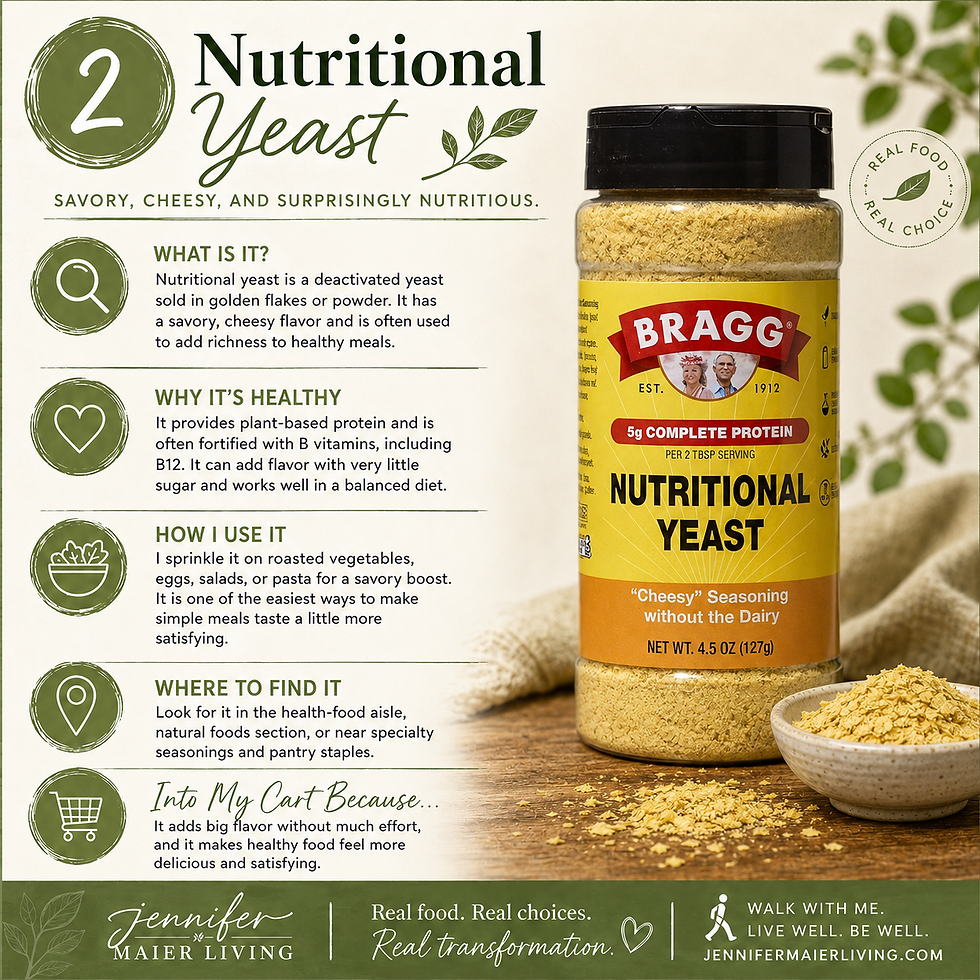
Nutritional Yeast
Don't let the name scare you. Nutritional yeast has nothing to do with the yeast used to bake bread. It's a flaky, golden seasoning with a rich, savory flavor that many people describe as slightly cheesy. I ignored it for years, but now it's one of those pantry staples I always keep on hand.
Why It's Worth a Second Look
Nutritional yeast is packed with B vitamins and is a surprisingly good source of plant-based protein. Just a couple of tablespoons can add flavor and nutrition without adding much fat or sugar. It's an easy way to boost the nutritional value of everyday meals.
How I Use It
I sprinkle it over scrambled eggs, roasted vegetables, salads, and even popcorn. It adds a savory flavor without overpowering the food, and it's one of my favorite ways to make simple meals taste a little more special.
Where to Find It
Look for nutritional yeast in the natural foods section, near specialty flours, seeds, and other healthy pantry items. Some grocery stores also stock it with spices or baking products.
🛒 Into My Cart Because...
It's one of the easiest ways I've found to add extra flavor and nutrition to everyday meals. Once I started using it, it quickly became a pantry staple that I never want to be without.
Pumpkin Seeds
Pumpkin seeds are easy to overlook because they are often tucked beside the nuts or salad toppings. Sometimes labeled pepitas, they are the small green seeds found inside a pumpkin seed’s white outer shell. They have a mild, nutty flavor and a satisfying crunch.
Why They’re Worth a Second Look
Pumpkin seeds provide plant-based protein, healthy fats, fiber, magnesium, zinc, and iron. They are an easy way to add more nutrition and texture without changing an entire meal.
How I Use Them
I sprinkle them over salads, add them to plain Greek yogurt, or eat a small handful when I want something crunchy. They are also good mixed with walnuts or other nuts and seeds.
Where to Find Them
Look near the nuts, seeds, salad toppings, or natural foods section. Choose pepitas when you want the soft green seeds without the outer shell.
🛒 Into My Cart Because…
They add protein, minerals, and crunch to foods I already eat, and they require absolutely no preparation.

Hearts of Palm
Hearts of palm are tender, pale pieces harvested from the center of certain palm plants. They have a mild flavor and a texture somewhere between an artichoke heart and a firm vegetable.
Why They’re Worth a Second Look
They are low in calories and carbohydrates while providing fiber and useful minerals. Their mild flavor also makes them easy to add to meals without overpowering everything else.
How I Use Them
I slice them into salads, serve them alongside vegetables, or enjoy them chilled with a simple dressing. They add substance and texture without requiring any cooking.
Where to Find Them
Look for jars or cans near the artichoke hearts, olives, and other canned vegetables. Some stores also carry refrigerated hearts of palm near specialty produce.
🛒 Into My Cart Because…
They are ready to eat, refreshingly different, and an easy way to make an ordinary salad feel more interesting.

Plain Kefir
Kefir is a tangy fermented milk drink that looks a little like thin yogurt. It is easy to miss in the dairy case, especially when it is tucked among flavored yogurts and specialty drinks.
Why It’s Worth a Second Look
Plain kefir provides protein and calcium, and varieties containing live cultures introduce microorganisms produced during fermentation. Choose plain, unsweetened kefir, since flavored versions can contain considerable added sugar.
How to Use It
Drink it chilled, blend it into a smoothie, or pour a small amount over berries. Its tart flavor also makes it a useful substitute for yogurt or buttermilk in foods you already prepare.
Where to Find It
Look in the refrigerated dairy section near yogurt, drinkable yogurt, or specialty milk products.
🛒 Into My Cart Because…
It is an easy way to add protein and a fermented food to the day without preparing anything.

Kimchi
Kimchi is a Korean side dish made from fermented vegetables, usually cabbage or radish, seasoned with ingredients such as garlic, ginger, and red pepper. It is crunchy, tangy, and often spicy, so a small amount adds a lot of flavor.
Why It’s Worth a Second Look
Kimchi gives you vegetables in a fermented form and may contain live cultures, depending on how it was made and stored. It can also be fairly high in sodium, so check the label and enjoy it as a flavorful addition rather than a large side dish.
How I Use It
Add a small spoonful beside eggs, grilled chicken, or a salad. You can also use it as a flavorful topping when an otherwise simple meal needs something bright and tangy.
Where to Find It
Look in the refrigerated section near sauerkraut, pickles, tofu, or other international and fermented foods. Refrigerated kimchi is the best place to look when you want a product that may still contain live cultures.
🛒 Into My Cart Because…
A small serving adds vegetables, bold flavor, and the benefits of a fermented food without requiring any preparation.

Ground Flaxseed
Ground flaxseed is easy to miss because it often looks like an ordinary bag of brown meal or flour. It has a mild, slightly nutty flavor and blends easily into foods without changing them very much.
Why It’s Worth a Second Look
Ground flaxseed provides fiber, plant-based omega-3 fat called ALA, and other nutrients. The ground form is usually the better choice because whole flaxseeds may pass through the digestive system without being fully broken down.
How I Use It
Stir it into plain Greek yogurt, blend it into a smoothie, sprinkle it over oatmeal, or add a spoonful to foods that could use a little more fiber. Start with a small amount and drink enough water, since increasing fiber too quickly can cause digestive discomfort.
Where to Find It
Look near the baking ingredients, natural foods, cereal, or other seeds such as chia and hemp hearts. Choose a package labeled ground flaxseed or flax meal.
🛒 Into My Cart Because…
It is an easy, nearly invisible way to add fiber and plant-based omega-3s to foods I already eat.

Tahini
Tahini is a smooth paste made from ground sesame seeds. It looks a little like nut butter and has a rich, slightly earthy flavor that works in both savory and sweet foods.
Why It’s Worth a Second Look
Tahini provides healthy fats, plant-based protein, calcium, and other minerals. A small spoonful adds flavor and richness, so a little goes a long way.
How I Use It
Drizzle it over roasted vegetables, stir it into salad dressing, add it to plain Greek yogurt, or spread a thin layer on toast. It also blends beautifully with lemon juice and a little water for a quick sauce.
Where to Find It
Look near the peanut butter, international foods, Mediterranean ingredients, or natural foods section. It is usually sold in a jar and may need stirring before use.
🛒 Into My Cart Because…
It makes simple foods taste richer and more satisfying while adding healthy fats and plant-based nutrition.

Edamame
Edamame are young green soybeans, usually sold frozen either in their pods or already shelled. They have a mild, slightly nutty flavor and a firm texture that makes them easy to add to simple meals.
Why It’s Worth a Second Look
Edamame provides plant-based protein and fiber, which can help make a meal feel more satisfying. It also contains iron, potassium, and other nutrients.
How I Use It
I keep a bag of shelled edamame in the freezer and add a small handful to salads or bowls. It can also be warmed and eaten on its own with a little salt.
Where to Find It
Look in the frozen vegetable section, often near peas, stir-fry vegetables, or other Asian-style foods. Choose shelled edamame when you want the easiest option.
🛒 Into My Cart Because…
It gives me an easy source of plant-based protein and fiber, and the frozen bag is always ready when a meal needs a little more substance.

Frozen Cauliflower Rice
Frozen cauliflower rice is simply cauliflower chopped into tiny, rice-sized pieces. It is one of those freezer items that can look unremarkable, but it is incredibly useful when you want something quick.
Why It’s Worth a Second Look
Cauliflower provides fiber, vitamin C, and other nutrients while being lower in carbohydrates than traditional rice. It adds volume to a meal without making it feel overly heavy.
How I Use It
I heat it as a quick side dish, mix it with regular rice, or use it underneath chicken, vegetables, or other toppings. Seasoning it well makes all the difference.
Where to Find It
Look in the frozen vegetable section near broccoli, cauliflower florets, or frozen vegetable blends.
🛒 Into My Cart Because…
It cooks in minutes, works with almost any meal, and helps me keep an easy vegetable option in the freezer.

Artichoke Hearts
Artichoke hearts are the tender center of the artichoke, usually sold canned, jarred, or frozen. They have a mild, slightly tangy flavor and a soft texture that makes them easy to add to everyday meals.
Why It’s Worth a Second Look
Artichoke hearts provide fiber and useful nutrients while adding very few carbohydrates. They are especially helpful when you want to make a salad or simple meal feel more substantial without adding much preparation.
How I Use It
I add them to salads, serve them alongside chicken or vegetables, or chop them into a simple Mediterranean-style bowl. I usually choose plain artichoke hearts packed in water rather than marinated versions when I want to control the added oil and seasoning.
Where to Find It
Look near olives, hearts of palm, canned vegetables, or specialty Mediterranean foods. Some grocery stores also carry frozen artichoke hearts in the freezer section.
🛒 Into My Cart Because…
They are tender, flavorful, ready to use, and one of the easiest ways to make an ordinary salad feel a little more special.

Sunflower Seeds
Sunflower seeds are the small, tender seeds found inside sunflower shells. They are sold either shelled or still in the shell, but the shelled version is much easier to add to everyday meals.
Why It’s Worth a Second Look
Sunflower seeds provide healthy fats, plant-based protein, fiber, vitamin E, and minerals such as magnesium. They add nutrition and crunch without requiring any preparation.
How I Use It
I sprinkle shelled sunflower seeds over salads, add them to plain Greek yogurt, or mix them with pumpkin seeds and walnuts for a simple snack.
Where to Find It
Look near the nuts, seeds, trail mix, salad toppings, or natural foods section. Choose shelled sunflower kernels when you want the easiest option.
🛒 Into My Cart Because…
They add crunch, healthy fats, and plant-based nutrition to foods I already eat, and they are easy to keep on hand.

Unsweetened Cocoa Powder
Unsweetened cocoa powder is made from roasted cocoa beans after much of the cocoa butter has been removed. It gives you deep chocolate flavor without the added sugar found in hot cocoa mixes.
Why It’s Worth a Second Look
Cocoa powder provides fiber, iron, magnesium, and naturally occurring plant compounds called flavanols. The key is choosing unsweetened cocoa powder rather than a sweetened drink mix.
How I Use It
I stir a small amount into plain Greek yogurt, blend it into a protein shake, or add it to coffee when I want a little chocolate flavor without turning it into dessert.
Where to Find It
Look in the baking aisle near flour, chocolate chips, and other baking ingredients. Check the label to make sure cocoa is the only ingredient and no sugar has been added.
🛒 Into My Cart Because…
It gives simple foods a rich chocolate flavor while adding fiber and minerals without a spoonful of added sugar.

Apple Cider Vinegar
Apple cider vinegar is made by fermenting apple juice into a sharp, tangy vinegar. It is usually sold filtered or unfiltered, and the cloudy strands sometimes seen in the bottle are called the “mother.”
Why It’s Worth a Second Look
Apple cider vinegar adds bold flavor with very little sugar or calories. Some research suggests vinegar may modestly reduce the rise in blood sugar after certain meals, but it is not a cure-all or a substitute for medical treatment.
How I Use It
I whisk a small amount into salad dressing, stir it into marinades, or use it to brighten roasted vegetables. It should always be diluted rather than swallowed straight because the acidity can irritate the throat and damage tooth enamel.
Where to Find It
Look near other vinegars, salad dressings, or natural-food products. Choose a bottle with no added sugar.
🛒 Into My Cart Because…
It gives simple foods a bright, tangy flavor and is an easy ingredient to keep on hand for dressings, marinades, and vegetables.

Chia Seeds
Chia seeds are tiny black or white seeds that absorb liquid and develop a soft, gel-like texture. They are easy to overlook because the package is usually tucked beside flaxseed, hemp hearts, and other specialty ingredients.
Why It’s Worth a Second Look
Chia seeds provide a generous amount of fiber along with plant-based omega-3 fat, protein, and minerals. Because they absorb liquid, they can also help make foods feel more filling.
How I Use It
I stir a small spoonful into plain Greek yogurt, blend it into a smoothie, or sprinkle it over oatmeal. Since chia seeds absorb liquid and are high in fiber, it is smart to start with a small amount and drink enough water.
Where to Find It
Look in the natural-foods section, baking aisle, or near flaxseed, hemp hearts, nuts, and seeds.
🛒 Into My Cart Because…
They are one of the easiest ways to add fiber and plant-based omega-3s to foods I already eat.



Comments