12 Things I Stopped Buying at the Grocery Store

Updated: Aug 23
And what I buy instead.
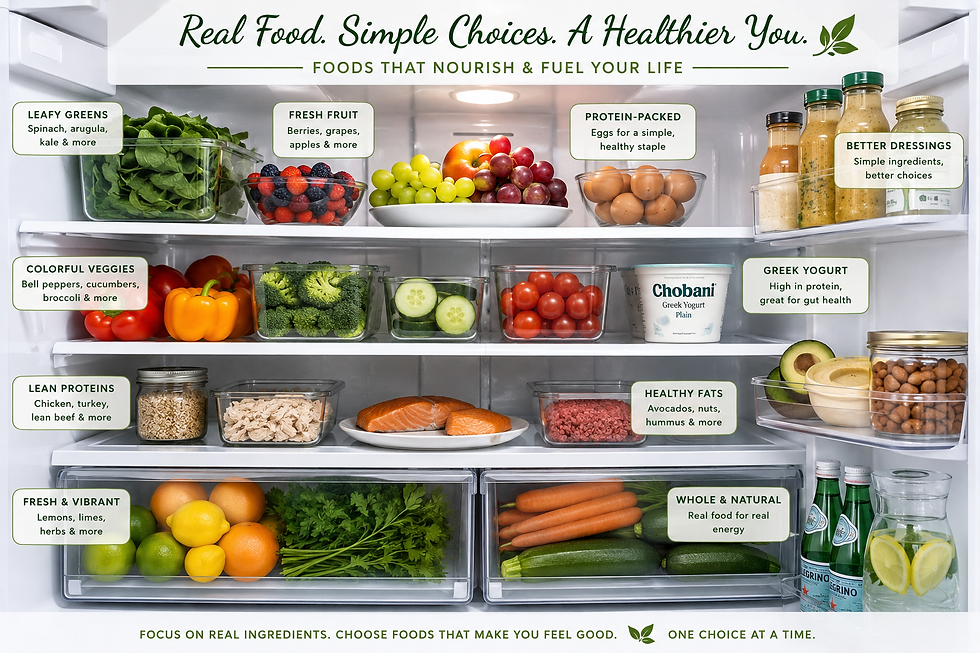
I used to think grocery shopping was mostly about willpower. I'd walk into the store with the best of intentions, fill my cart with foods I thought I was supposed to eat, and tell myself that this week was going to be different. Sometimes it was. More often than not, I came home with a mixture of healthy choices, impulse purchases, and a few things that sounded like a good idea in the grocery aisle but somehow never made it onto my plate.
Looking back, I realize I spent years chasing the "perfect" grocery cart. Every new diet seemed to come with another list of foods I was supposed to avoid and another list of foods I absolutely had to buy. It became exhausting trying to keep up with constantly changing nutrition advice. One week carbohydrates were the enemy. The next week it was fat. Then it was calories, points, or ingredients I couldn't even pronounce. I found myself spending more time worrying about grocery rules than actually enjoying the process of nourishing my body.
Today, my shopping cart looks very different, but not because I'm following another set of strict rules. Over time, I've simply stopped buying certain foods because they no longer support the way I want to live. In almost every case, I haven't given something up without finding something better to replace it. Instead of feeling deprived, I actually enjoy grocery shopping more because my decisions have become simpler. I know what makes me feel good, what helps me reach my protein goals, what keeps me energized, and what quietly makes healthy living a little easier.

This isn't a list of foods that no one should ever buy. Every family is different, every budget is different, and every person's health journey is unique. These are simply the twelve things I've gradually stopped putting in my grocery cart and the healthier alternatives that have worked well for me. My hope isn't to convince you to shop exactly the way I do. It's simply to share a few ideas that might make your next trip to the grocery store a little easier and your next meal a little more nourishing.
Let's start in the breakfast aisle.
1. Sugary Breakfast Cereals
If you had looked inside my pantry a few years ago, you probably would have found at least one brightly colored box of breakfast cereal sitting on the shelf. It was quick, easy, and somehow felt like a perfectly reasonable way to start the day. After all, cereal has been marketed for decades as part of a healthy breakfast. I never really questioned it.
The more I began learning about nutrition, though, the more I realized that many breakfast cereals aren't giving our bodies what they need, especially after fifty. While there are certainly healthier options available today, many popular cereals are surprisingly high in added sugar and relatively low in protein. That combination often leads to a quick rise in blood sugar followed by an energy crash a couple of hours later. Before long, we're hungry again and reaching for another snack.
As we get older, breakfast becomes an important opportunity to give our bodies the protein they need to help preserve muscle, support metabolism, and keep us feeling satisfied longer. Unfortunately, many cereals simply don't provide enough protein to accomplish that. Instead, they leave us starting the day already behind on one of the nutrients that becomes increasingly important as we age.
What I buy instead
Eggs
Plain Greek yogurt with fresh berries
Cottage cheese with fruit
Fairlife milk
Protein shakes on busy mornings
High-protein breakfast bowls
Old-fashioned oats topped with nuts and chia seeds
I haven't sworn off cereal forever, and I'm certainly not suggesting you have to. There are mornings when convenience wins, and that's perfectly okay. The difference is that cereal is no longer my everyday breakfast. Most mornings, I build my breakfast around protein first because I've discovered I feel fuller, have more energy, and don't find myself wandering into the kitchen looking for a snack by ten o'clock.
One of the things I appreciate most about this change is how simple it has been. I didn't need another complicated meal plan. I just needed to ask a different question while standing in the cereal aisle: "Will this breakfast actually nourish me?" That one question has quietly changed the way I shop, the way I eat, and the way I feel for the rest of the day

2. Flavored Coffee Creamers
If there's one thing you'll almost always find in my hand during the morning, it's a cup of coffee. I genuinely enjoy the ritual of slowing down for a few minutes before the day begins. For years, though, I paid much more attention to what was on my dinner plate than what I was pouring into my coffee. It was easy to overlook because it didn't seem like very much. After all, it was "just a little creamer."
The problem is that many flavored coffee creamers contain added sugars, corn syrup, vegetable oils, artificial flavors, and ingredients that don't do much to nourish our bodies. When you multiply that "little splash" by two, three, or four cups of coffee every day, those extra calories and added sugars can add up surprisingly quickly. Many of us would never dream of putting several teaspoons of sugar into every cup of coffee, yet some creamers provide almost the same result without us really thinking about it.
One of the things I've learned on this journey is that healthy living often isn't about making one enormous change. It's about noticing the small habits we repeat every single day. Coffee is one of those daily habits for many of us, which means even a small improvement can have a meaningful impact over the course of weeks, months, and years.
What I buy instead
Heavy cream
Half-and-half
Unsweetened almond milk
Fairlife milk
Unsweetened coconut milk
Cinnamon for natural flavor
Pure vanilla extract (a drop goes a long way)
Today I use a small amount of heavy cream in my coffee because I enjoy the taste and it fits the way I eat. I'm not suggesting it's the right choice for everyone. The bigger lesson isn't about heavy cream versus flavored creamer. It's about becoming more intentional. Instead of automatically reaching for whatever's in the refrigerator, I started asking myself whether that choice was helping me move toward the healthier life I wanted to build.
One of the things I appreciate most is that I don't feel deprived. I still enjoy my morning coffee every bit as much as I always have. The ritual hasn't changed. I've simply found a way to enjoy it that better supports my overall health goals. To me, that's what sustainable healthy living looks like. It isn't about giving up everything you enjoy. It's about making thoughtful choices that you can happily live with for years to come.
3. Frozen Diet Meals
There was a season of my life when my freezer was full of frozen diet meals. I bought them because I genuinely wanted to eat healthier, and they seemed like the perfect solution. They promised portion control, fewer calories, and convenience all wrapped up in one little box. I could pop one in the microwave, feel like I was making a responsible choice, and move on with my day.
Looking back, I realize I was often choosing those meals because they were marketed as "diet food," not because they were necessarily nourishing my body. Many frozen meals are highly processed and can be surprisingly high in sodium while providing relatively little protein or fiber. Some contain only a small serving of meat or vegetables, leaving me hungry again not long after I finished eating. They were helping me eat fewer calories, but they weren't always helping me eat better.
One of the biggest shifts in my thinking has been moving away from eating foods because they have the word healthy or diet on the package. Today I spend much less time looking at marketing claims and much more time looking at the ingredient list and nutrition label. I ask myself a simple question: Will this meal actually nourish me and keep me satisfied?
What I buy instead
Rotisserie chicken
Fresh chicken breasts
Lean ground beef
Frozen vegetables
Fresh salads
Hard-boiled eggs
Meal-prepped leftovers
Homemade soups
Pre-cooked grilled chicken strips for busy days
One of my favorite discoveries has been the power of leftovers. Years ago, I used to think leftovers were boring. Now I see them as one of the healthiest conveniences in my kitchen. If I cook extra chicken or steak at dinner, tomorrow's lunch is often already waiting for me. It saves time, reduces food waste, and usually provides far more protein and better nutrition than many frozen convenience meals.

That doesn't mean I'll never eat a frozen meal again. Life gets busy, and convenience has its place. The difference is that convenience is no longer my primary goal. Nourishment is. I've found that spending just a little time planning ahead allows me to fill my refrigerator with foods that help me feel stronger, more energized, and much more satisfied than the frozen dinners I once depended on.
4. Sugary Yogurt
For years, yogurt felt like one of the healthiest things I could put in my grocery cart. It was marketed as a smart breakfast, an easy snack, and a great source of calcium. I would stand in front of the refrigerated case choosing fruit-flavored yogurts, convinced I was doing something good for my body. It never occurred to me to turn the container over and actually read the nutrition label.
The more I learned about nutrition, the more surprised I became. While yogurt itself is an excellent food, many flavored varieties are loaded with added sugar. Some contain twenty grams or more in a single serving, which can quickly turn what seems like a healthy snack into more of a dessert. At the same time, many of those products contain relatively little protein, leaving us hungry again much sooner than we'd like.
Today, I look for yogurt that gives me the greatest nutritional value rather than the sweetest flavor. Greek yogurt has become one of my favorite staples because it's naturally higher in protein, helping me stay satisfied longer while also supporting my goal of preserving muscle as I get older. Instead of buying the sweetest option on the shelf, I prefer adding my own fruit so I can enjoy natural sweetness without so much added sugar.
What I buy instead
Plain Greek yogurt
Plain full-fat Greek yogurt
Cottage cheese
Fresh berries
Blueberries
Strawberries
Raspberries
Blackberries
Chopped walnuts
Chia seeds
Ground flaxseed
A sprinkle of cinnamon
A drizzle of honey (occasionally)
One of the unexpected benefits of making this change is that my taste buds have changed too. Foods I once thought weren't sweet enough now taste perfectly satisfying. Fresh berries have become one of my favorite additions because they provide natural sweetness, fiber, antioxidants, and beautiful color without relying on added sugars to make the yogurt enjoyable.
Healthy living has taught me that the goal isn't to remove all sweetness from life. It's simply to become more intentional about where that sweetness comes from. Choosing plain Greek yogurt doesn't feel like a sacrifice anymore. It feels like another opportunity to give my body the nourishment it deserves while still enjoying every bite.

5. Potato Chips and Salty Snack Foods
There was a time when I never thought much about the snack aisle. A bag of potato chips would find its way into my shopping cart almost automatically. They were easy to serve with lunch, easy to snack on while watching television, and easy to reach for when I wanted something crunchy. Like so many habits, it wasn't something I questioned because it had simply become part of my routine.
Over time, I realized that those snacks rarely left me feeling satisfied. I'd eat a handful of chips, enjoy them for a few minutes, and then find myself looking for something else not long afterward. Many popular snack foods are high in refined carbohydrates, sodium, and unhealthy fats while providing very little protein or fiber. They satisfy a craving in the moment, but they don't do much to support long-lasting energy or keep us feeling full.
One of the biggest changes I've made is thinking differently about snacks. Instead of asking myself what sounds good for the next ten minutes, I try to ask what will help me feel satisfied for the next few hours. That simple shift has helped me make choices that support my overall health rather than simply satisfying a craving.
What I buy instead
Mixed nuts
Roasted almonds
Walnuts
Pumpkin seeds
String cheese
Hard-boiled eggs
Greek yogurt
Cottage cheese
Bell pepper slices
Cucumber slices
Celery with peanut butter
Homemade trail mix
Pork rinds (when I'm craving something crunchy)
One thing I've learned is that healthy snacking isn't really about avoiding food. It's about choosing foods that actually work for you instead of against you. When I eat something that contains protein or healthy fats, I stay satisfied much longer than I ever did with a bag of chips. I also find myself thinking about food less because I'm giving my body something that truly nourishes it.
Do I still enjoy potato chips once in a while? Absolutely. This article isn't about creating another list of forbidden foods. It's about recognizing that the choices I make most often have the greatest impact on my health. Today, chips are an occasional treat instead of a pantry staple, and honestly, I don't miss buying them every week. My grocery cart is filled with foods that help me feel stronger, more energized, and better prepared for whatever the day brings.
6. Bottled Salad Dressing
For years, I thought if I ordered a salad, I had automatically made a healthy choice. I didn't pay much attention to what was poured on top because, after all, it was "just dressing." It wasn't until I started reading nutrition labels that I realized many bottled dressings contain added sugars, highly refined oils, preservatives, and long ingredient lists that didn't resemble anything I'd keep in my own pantry.
Now, that doesn't mean every bottled dressing is unhealthy. There are some excellent options available today. The difference is that I no longer buy a dressing simply because it's sitting on the grocery store shelf. I take a few extra seconds to turn the bottle around and read the ingredient list. If I can't recognize most of the ingredients, or if sugar is one of the first things listed, I usually put it back.
One of the nicest surprises has been discovering how incredibly easy homemade dressings are to make. They take less than two minutes to prepare, taste fresher than most store-bought versions, and allow me to control exactly what goes into them. I also find that when I genuinely enjoy my salad dressing, I eat more salads without feeling like I'm forcing myself to be healthy.
What I buy instead
Extra-virgin olive oil
Red wine vinegar
Balsamic vinegar
Fresh lemons
Dijon mustard
Apple cider vinegar
Garlic
Fresh herbs
Avocados
High-quality bottled dressings made with simple ingredients
One of my favorite dressings couldn't be simpler. I drizzle olive oil and red wine vinegar over my salad, add a little salt and freshly cracked black pepper, and toss everything together. Sometimes I'll add a squeeze of fresh lemon juice or a small spoonful of Dijon mustard for extra flavor. It's fresh, satisfying, and lets the ingredients in the salad shine instead of covering them up.
The older I get, the more I appreciate simplicity. Healthy eating doesn't have to involve complicated recipes or expensive specialty products. Sometimes the healthiest choice is also the easiest one. A bottle of good olive oil, a quality vinegar, and a refrigerator full of fresh vegetables have become all I really need to build a salad I genuinely look forward to eating.

7. Diet Foods
For years, I was convinced that if the word diet appeared somewhere on the package, it must be a healthier choice. My grocery cart was filled with foods that promised fewer calories, fewer carbohydrates, less fat, or some other shortcut to better health. I honestly believed I was making good decisions because the packaging told me I was.
The longer I've been on this journey, the more I've realized that marketing and nutrition aren't always the same thing. Many so-called "diet foods" achieve their lower calorie count by replacing one ingredient with another, often adding artificial sweeteners, fillers, starches, or highly processed ingredients to improve taste and texture.
While some of these products certainly have a place for some people, I discovered they rarely left me feeling satisfied. Instead of nourishing me, they often left me hungry and reaching for something else an hour later.
One of the biggest changes I've made is shifting my attention away from the front of the package and toward what's actually inside it. Rather than asking whether a food is labeled diet, low-fat, low-carb, or light, I try to ask a much simpler question: Is this real food that will help my body feel strong and satisfied? More often than not, that question leads me toward foods that have very little marketing at all.
What I buy instead
Fresh chicken
Lean beef
Eggs
Greek yogurt
Cottage cheese
Fresh vegetables
Fresh fruit
Nuts
Avocados
Olive oil
Natural cheese
Foods with short, recognizable ingredient lists
One of the most freeing things I've experienced is no longer feeling like I need "special" diet foods to be successful. My grocery cart looks much simpler than it used to. Instead of filling it with products designed to help me lose weight, I fill it with foods designed to nourish my body. Ironically, that's when healthy eating finally became easier. I stopped trying to outsmart my appetite and started giving my body the nutrients it had been asking for all along.
Healthy living has taught me that real food doesn't need a marketing campaign to convince me it's healthy. A carton of eggs doesn't promise to transform my life. Neither does a bag of spinach or a package of chicken breast. They simply provide the nourishment my body needs, and I've found that to be much more satisfying than chasing the next "miracle" product in the diet aisle.
8. Soda and Sugary Drinks
For many years, I never gave much thought to what I was drinking. Like most people, I focused on my meals and snacks, rarely considering that beverages could quietly contribute hundreds of calories and large amounts of added sugar throughout the day. It wasn't unusual to grab a soft drink with lunch or reach for something sweet in the afternoon when my energy started fading.
The more I learned about nutrition, the more I realized that what we drink matters just as much as what's on our plate. Regular soft drinks are one of the largest sources of added sugar in the American diet. A single 20-ounce soda can contain more than 60 grams of sugar—well over the American Heart Association's recommended daily limit of 25 grams of added sugar for women. Consuming sugar in liquid form also tends to be less satisfying than eating whole foods, making it easy to consume extra calories without ever feeling full.
One of the biggest surprises for me was discovering that many of my afternoon energy slumps weren't caused by needing more caffeine or sugar. More often than not, I simply needed more water. Once I began paying closer attention to my hydration, I found that I felt more energized, thought more clearly, and experienced fewer cravings throughout the day.
What I buy instead
Filtered water
Sparkling water
Unsweetened iced tea
Black coffee
Coffee with a small amount of heavy cream
Lemon water
Water flavored with fresh fruit
Electrolyte drinks without added sugar (when appropriate)
I won't pretend I never enjoy a Diet Coke because I do. It's one of the small pleasures I still enjoy from time to time, and I'm perfectly comfortable saying that. Healthy living has never been about eliminating every food or drink I enjoy. It's about making better choices most of the time. The biggest difference is that soda is no longer my primary beverage. Water has taken its place, and that one simple change has probably done more for my overall health than I realized at the time.
One of the things I've come to appreciate about healthy living is that it doesn't require perfection to make a difference. I don't need to swear off every favorite drink forever to become healthier. I simply need to make the healthier choice more often than I make the less healthy one. That's a goal that feels realistic, sustainable, and much easier to live with for the long haul.

9. Foods I Bought Out of Guilt
One of the biggest surprises on this journey had nothing to do with nutrition labels or ingredients. It had everything to do with why I was putting certain foods into my shopping cart in the first place. There was a time when I bought foods simply because I thought I was supposed to eat them. They weren't foods I actually enjoyed, and they certainly weren't foods I looked forward to eating. I bought them because every magazine article, television commercial, or new diet seemed to suggest that healthy women kept those products in their kitchens.
The problem was that many of those foods eventually ended up in the back of my refrigerator or pantry. I'd buy them with the best intentions, ignore them for a week or two, and eventually throw them away. Looking back now, I realize I wasn't shopping for the life I was actually living. I was shopping for the person I hoped I might magically become.
Healthy living became much easier when I stopped buying food out of guilt and started buying food I genuinely enjoy eating. That doesn't mean every meal is perfect or every choice is ideal. It simply means I've learned that lasting habits are built around foods I'll happily eat again tomorrow. If I don't enjoy it, I'm probably not going to keep buying it, no matter how "healthy" someone else tells me it is.
What I buy instead
Foods I genuinely enjoy eating
Fresh vegetables I'll actually cook
Fruit I'll finish before it spoils
Proteins that support my goals
Healthy fats I look forward to using
Simple ingredients I can turn into real meals
Foods that make healthy eating enjoyable instead of feeling like a chore
One of the most freeing lessons I've learned is that healthy living doesn't require pretending to like foods I don't actually enjoy. I'd much rather build a grocery cart around foods that nourish me and make me happy than force myself through another week of meals that leave me feeling deprived. The goal isn't to create the "perfect" grocery cart. It's to create one that supports the life you're actually building.
Today, my grocery cart looks different because my mindset is different. I no longer shop with guilt, fear, or the hope that one more "healthy" product will finally fix everything. I shop with intention. I buy foods that help me feel strong, energized, and satisfied, and I leave the rest on the shelf. Ironically, that simple shift has made grocery shopping easier than it's ever been.
10. White Bread
Bread has been part of our meals for as long as I can remember. Sandwiches for lunch, toast with breakfast, rolls with dinner—it was simply what we ate. I never gave much thought to it because bread seemed like such a normal part of everyday life. It wasn't until I started paying closer attention to how different foods made me feel that I realized not all breads are created equal.
Traditional white bread is made from refined flour, which removes much of the fiber and nutrients found in whole grains. Because it's digested quickly, it can cause blood sugar to rise rapidly and often leaves us feeling hungry again sooner than we'd like. That doesn't mean there's anything wrong with enjoying a slice of white bread now and then. It simply means it isn't the choice I make most often anymore.
One of the biggest changes I've made is asking myself whether bread is actually adding something meaningful to my meal or whether it's simply there because I've always expected it to be. Sometimes I still enjoy a sandwich, but other times I realize I'd rather fill my plate with a little more protein and vegetables instead. I no longer feel like every meal has to include bread in order to feel complete.
What I buy instead
High-fiber whole grain bread
Sprouted grain bread
Low-carb tortillas
Lettuce wraps
Bell pepper "boats"
Extra vegetables instead of an extra slice of bread
Open-faced sandwiches
More protein and fewer fillers
One of my favorite discoveries has been low-carb tortillas. They make wonderful wraps, breakfast burritos, and even homemade pizzas when I want something quick and easy. Other days I skip the bread altogether and simply enjoy the protein and vegetables on their own. I've found that I leave the table feeling just as satisfied—often even more so.
Healthy living has taught me that every meal doesn't have to look the way it did twenty years ago. Sometimes the healthiest choice is simply being willing to rethink an old habit. I haven't stopped eating bread because I'm afraid of it. I've simply learned that there are other choices that leave me feeling stronger, more energized, and better nourished. Those are the choices I naturally find myself making most of the time.
11. Candy at the Checkout Line
I don't think grocery stores place candy bars, cookies, and chocolate near the checkout by accident. By the time we've worked our way through the entire store, made dozens of decisions, and waited in line to pay, our willpower is usually running low. Those last few feet before the register are designed to encourage impulse purchases, and for years, they worked on me more often than I'd like to admit.
The interesting thing is that I rarely went into the grocery store planning to buy candy. It usually happened because I was hungry, tired, or simply standing there waiting for my turn to check out. It wasn't really about the candy itself. It was about convenience and temptation meeting at exactly the right moment.
One of the simplest changes I've made is refusing to grocery shop when I'm hungry. Research has shown that people tend to buy more food—and often less nutritious food—when they shop on an empty stomach. Today, I try to eat a meal or at least a protein-rich snack before heading to the grocery store. It's amazing how much easier it is to walk past those checkout displays when I'm already satisfied.
What I buy instead
Nothing at the checkout
A bottle of water if I'm thirsty
Mixed nuts
String cheese
Protein bars (with simple ingredients)
Dark chocolate to enjoy at home occasionally
Fresh fruit already waiting in my kitchen
One of the biggest lessons I've learned is that I don't have to win every battle with temptation. I simply need to avoid creating unnecessary ones. If I know I'm likely to make an impulsive decision when I'm hungry, I'd rather solve the problem before I walk into the store than rely on willpower once I'm standing in front of a shelf full of candy bars.
These days, if I want a piece of chocolate, I buy one intentionally and enjoy it at home instead of grabbing whatever happens to be staring at me while I'm waiting in line. That small shift has reminded me that healthy living isn't about saying no to everything I enjoy. It's about making my choices intentionally instead of automatically. Ironically, I enjoy those occasional treats much more because they feel like a choice rather than a habit.
12. Convenience Foods That Didn't Really Serve Me
One of the biggest changes in my grocery cart had very little to do with nutrition labels. It had everything to do with slowing down long enough to think about what I was buying. There was a time when convenience drove almost every decision I made at the grocery store. If it was quick, pre-packaged, individually wrapped, or could be microwaved in a few minutes, it usually found its way into my cart. At the time, I told myself I was simply too busy to cook, and some weeks that was certainly true.
Looking back, I realize convenience wasn't really the problem. We all need convenient meals from time to time. The problem was that convenience had quietly become my default instead of my backup plan. Many of those foods were highly processed, lower in protein, and left me feeling hungry again not long after I finished eating. They solved the problem of getting dinner on the table quickly, but they rarely helped me feel my best.
Today, I still appreciate convenience, but I've learned to create it differently. Instead of relying on highly processed meals, I try to make healthy food the convenient choice. I'll cook extra chicken for tomorrow's lunch, wash vegetables as soon as I bring them home, keep hard-boiled eggs in the refrigerator, or pick up a rotisserie chicken on a busy afternoon. Those small habits make healthy eating almost as convenient as opening a box, but they leave me feeling much better afterward.
What I buy instead
Rotisserie chicken
Pre-washed salad greens
Frozen vegetables
Hard-boiled eggs
Fresh fruit
Meal prep containers
Lean proteins I can cook once and enjoy several times
Simple ingredients that become quick meals
The biggest lesson this grocery cart has taught me is that healthy living isn't about perfection. It's about intention. I don't expect every meal to be homemade, and I certainly don't expect every shopping trip to be perfect. Life is too busy for that. What I do hope is that most of the food I bring into my home supports the life I'm trying to build instead of making that journey harder.
If you've noticed something about this list, it's that none of these changes happened overnight. I didn't clean out my pantry in one afternoon or completely reinvent the way I shop. One by one, I simply started replacing foods that weren't serving me with foods that made me feel stronger, more energized, and better nourished. Looking back, I don't think it was any one grocery item that changed my health. It was changing the way I thought every time I pushed my cart down another aisle.
Final Thoughts
If there's one thing I hope you'll take away from this article, it's that healthy living doesn't begin with a perfect grocery cart. It begins with one intentional decision. You don't have to throw everything away and start over tomorrow. Simply choose one or two changes that feel realistic for you, and build from there.
My grocery cart didn't change overnight, and neither did my health. One small decision led to another, and before long, I realized I wasn't just shopping differently—I was thinking differently. Instead of asking, "What should I avoid?" I started asking, "What will help my body thrive?" That simple shift changed far more than what I brought home from the grocery store.
I hope this list encourages you to fill your cart with foods that nourish your body, support your goals, and make healthy living feel sustainable instead of stressful. Because at the end of the day, it isn't about buying the perfect foods. It's about making thoughtful choices that help you build a healthier, stronger, and more joyful life—one grocery trip at a time.
Jennifer 🌿


Comments